
Theme
Who Gets Left Behind
Automation hits the bottom rungs first, and workers across white-collar jobs and entry-level roles lose the way they learned. Guests ask who pays, who trains and who decides.
Episodes on this theme
 Littératie numérique à l'ère de l'IA : Défis et opportunités pour les employés - Benoit AubertBenoit AubertProfesseur à HEC Montréal, chercheur au CIRANO (ancien directeur de la Roe School of Business et de l'École de gestion de l'information à l'Université Victoria de Wellington)
 Will AI Make Universities Complacent? - Nabil BeitinjanehNabil BeitinjanehFaculty Lecturer and Academic Program Coordinator, McGill University School of Continuing Studies
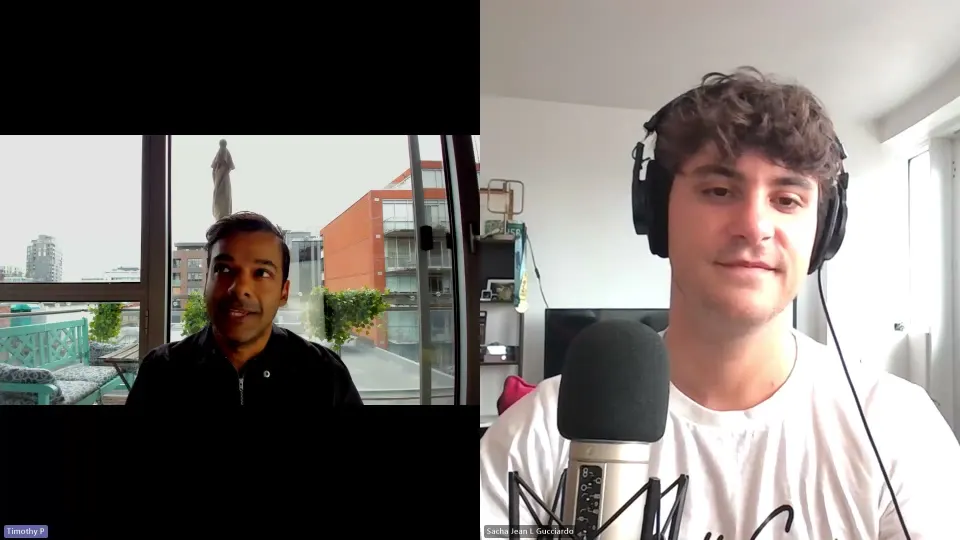 Democratizing AI Education: A Conversation with Timothy from the AI Launch LabTimothyCo-Founder and Managing Director of the AI Launch Lab; member of the AI Advisory Board at Dawson College
 How to Revolutionize Data Engineering with Diana, the AI-Powered Jr Data EngineerJosh GrayCo-founder and CEO of Artemis
 La Révolution de l'IA avec MoovAIGuillaume PetitclercCo-fondateur et VP Marketing et Partenariats, MoovAI (aussi CMO et co-fondateur de Snitch AI)
 The Real Difference Between Data, ML, and AI EngineersOg RamosEngineer, data consultant and tech tinkerer
 The Creator Economy, EdTech, and AI's Impact with Thomas FortoulThomas FortoulHost of the Thinking Tech podcast; helping an EdTech startup at Next.ai, Montréal
In their words
If AI does all the entry-level work, who becomes your manager in ten years?
Le vrai défi pour les entreprises et pour les employés, c'est que ces tâches-là d'entrée, c'est ce qui permettait aux employés de développer l'expertise pour arriver au niveau de gestion. Et pour les entreprises, si on donne toutes ces tâches-là à l'IA, dans 10 ans, on n'a plus de gestionnaire pour réfléchir aux prochains produits, pour réfléchir aux idées innovatrices.Benoit Aubert
Asked how he reassures people worried about losing their jobs to AI, Aubert explains why automating entry-level tasks creates a problem for building future managers.
Data entry is boring, but it's also how people learned the system. What replaces it?
c'était des tâches qui nous permettaient d'apprendre le fonctionnement de certains systèmes. Et une fois qu'on avait développé ça, on avait accès à d'autres tâches. Notre problème, c'est que là, il va falloir trouver d'autres chemins pour avoir accès à ces tâches-là qui sont plus intéressantes. Et ce chemin-là, on ne l'a pas encore identifié.Benoit Aubert
Responding to the view that AI removing repetitive tasks like data entry is a good thing, Aubert says those tasks were how people learned.
Outsourcing taught us this: automate the junior work and you cut the path to senior roles.
they would say but if i don't have a path to learn by coding how do i become a team lead and how or an effective team lead and then from there how do i become an architect or you know either path i don't have that path anymore you actually just killed it for me by outsourcing the workNabil Beitinjaneh
He recalls junior developers objecting when basic coding was outsourced, and compares it with AI today.
The lower rungs of every organization are getting stripped away. Here is what that means for entry-level jobs.
I think it's like, you need to race to get to the top of an organization as fast as possible before the, the lower levels just get stripped away. And this is kind of how I was feeling about finance, like years ago when I went back to schoolTimothy
Timothy explains why entry-level jobs are most exposed to AI and how it shaped his own career change.
The Luddites weren't against technology. They were against how factory owners used it.
the idea that we have of Luddites is that they were like anti-technology. And, and actually a lot of what they were was not anti-technology, but anti how technology was beginning to be used by factory owners.Timothy
Timothy uses a story about artisans and factories to explain where workers stand with AI today.
If AI makes your 10 engineers 50% more productive, firing half of them gets you nowhere.
Now, with AI, what's powerful is let's say you have 10 engineers, right? And you're able to get 50% more done. That doesn't mean you therefore, you know, you can double your output. That doesn't mean therefore you have to fire, you can fire half your engineers, right? Because if you fire half your engineers, you're just going to get done what you were currently getting done.Josh Gray
Josh answers whether an AI agent like Diana will replace data engineers, using an argument about capital-constrained companies.