
Anick Beaulieu
CEO of C2, the experiential studio behind C2 Montréal
Episode with Anick
 Designing the Future of Human Connection — Anick Beaulieu on AI, Creativity & C2 ExperiencesThe CEO of C2 explains how her events team uses AI as a creative partner while betting on in-person connection, and why IP limits what clients will buy.Anick BeaulieuCEO of C2, the experiential studio behind C2 Montréal
In Anick’s words
Clients won't buy a 100% AI event, because nobody owns the output.
And there's still a lot of issues around IP. So clients are still reluctant to have fully baked AI creative work because they don't have ownership. And there are still like gray zones around that. So it's not like, you know, we can go out, pump up an event that's 100% AI and sell it right now.A Nike ski ad she saw at eight taught her how to handle AI.
And then the beat comes on and you see snowboarders and free skiers and young girls killing it. And at the end, it's like, whether you want it or not, it won't go away. And to me, this was like, wow, change is change. And the wave is going to come and you're either like surfing it or you're going to be left behind or, you know, kind of struggling for your life.Two entrepreneurs met on a Ferris wheel at C2 and ended up with a business and a child.
I learned that a couple of entrepreneurs met at C2, fell in love, started a business and had a child. Oh, this is amazing. After being on a Ferris wheel thing together. And I was like, wow. So we've created a family and a business. That's kind of crazy.AI marketing is so good it makes everyone feel behind, even when most aren't.
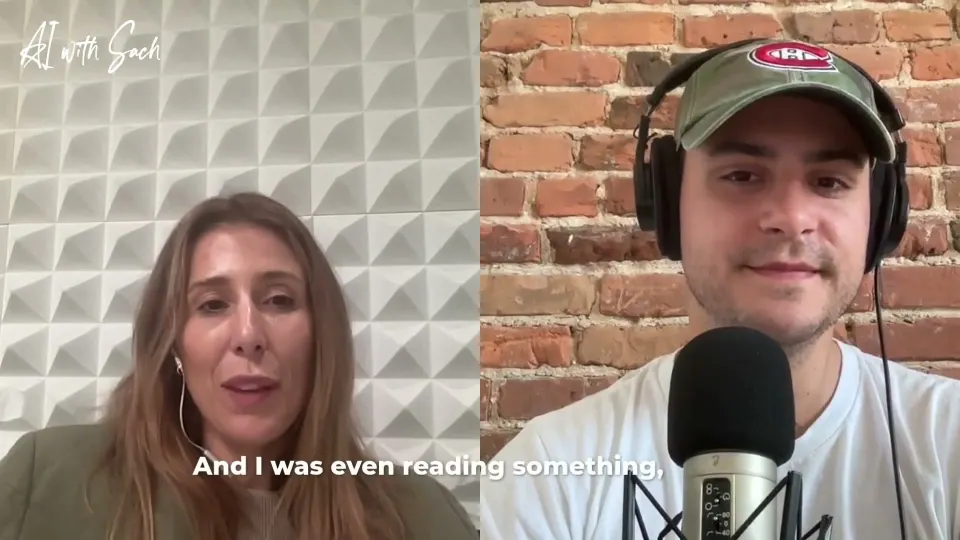
And I was even reading something where it was like, the marketing behind the technology was so good that it's making think everyone think that they're behind on integrating it.Humans do business together, not companies. That's why her team builds in-person events.
we want to do real human connections because we believe that humans do business together, not companies. And we think that if we pay attention to how people connect, the outcome of those connections will be better for businesses, will be better for society,Event producers want AI to read emotion in the room and trace what comes years later.
I think what will yield a lot of power and will kind of help justify investments in better experiences will probably be linked to facial recognition around emotion, being able to track how people feel, being able to trace what happens after these moments, right?She caught herself saying thanks to her AI. Why do we do that?
I also think there's something sometimes that you're like, oh my God, you don't feel alone. You know how sometimes you're like working and you're like, and I think we're developing some form of relationships with them. It's like, thanks, that was great. Why am I talking like that to my AI?AI helps her small team do more. She also expects it to shrink other teams.
We're a fairly small team. So what we can achieve to me seems like it's really helping us. But then I think it's going to downsize some of the teams as well. So I think it's not a one size fits all.There's a gap between what AI can make and what you can actually sell.
because I think that there's this utopia around, oh, my God, it's taking all the jobs and it's, you know, but at the end of the day, it's you can't sell it 100% right now, which means there's still a gap, I think, between what it can do and what you can actually monetize from.A CEO who says she's no tech expert lets her team teach her.
I'm not a tech expert. Like, this is not my field. So I have people in a team that are really good and that are leveraging the tools in ways that are so creative and productive. And so it's about making sure that you also give space for people to teach you, drive initiatives internally, you know.Saying you're against AI shuts down the useful question: how, not if.
I don't think you can be like, oh, I'm against it. I'm against change. I'm against technology. And I think that this kind of behavior is detrimental to even having like constructive discussions about how rather than if.Imagine walking into a conference already knowing the 20 people you should meet.
is it that I come into an experience without having to speak? I already know which sessions I should go to. What are the top 20 people I should be meeting during that event?AI didn't change how she leads. It removed any idea of business as usual.
I think it is creating a sense of urgency around an unknown that we know we need to integrate. So it's not like I've changed, you know. I just think it's like an extra layer of things you need to think about that, like, is not business as usual.